Wholesale vs Importing: Key Trade-Offs You Need to Consider

Jack Young
- Last Updated: 2 February 2026
The Gist — Choosing the Right Sourcing Strategy
Your sourcing strategy, whether it be wholesale, importing, local manufacturing, or a hybrid approach, must align with your cash flow, storage capacity, and your appetite for risk. Wholesale is ideal for businesses with limited warehouse space or capital, offering faster replenishment and lower risk. Importing unlocks higher margin potential and product exclusivity but demands significant upfront investment, robust QC processes, and the ability to manage longer lead times. Local/European Manufacturing offers sustainability advantages and shorter supply chains but typically requires a premium pricing strategy to offset higher production costs. A hybrid approach is often associated with market leaders. However, when first moving from a pure wholesale model, while more complex to manage, success often lies with a Hybrid approach. Using wholesale for “bread and butter” stock consistency while importing differentiated ranges to build a unique brand barrier, leading to long-term success.
Table of Contents
Why Do You Need a Buying Strategy?
The barriers to entry in the furniture industry are low, with the minimum requirements to compete being eroded with each advancement in technology. Retail is becoming increasingly competitive and everyone is looking for ways to boost their margins not just to survive but to thrive.
There seems to be an endless discussion going on—a kind of tug-of-war about whether it is better to buy wholesale or import. The answer seems simple for some: lose a bit of flexibility for increased margins, but it’s rarely this simple. There are various factors to consider, many of which relate to your business, but some even relate to the type of person you are.
So, when faced with the question of whether to buy products wholesale or import, how do you determine what is best for your business?
Spoiler alert: There is no one-size-fits-all answer.
The Basics: Wholesale vs. Importing
Buying Wholesale
When you buy wholesale, you purchase products from established suppliers or distributors who typically handle inventory storage and logistics on your behalf, some even handle order fulfilment. This means you don’t have to worry about managing stock levels or dealing with the complexities of international shipping. The supplier is responsible for sourcing, storing, and delivering the products directly to you or the customer, which can save you time and reduce the risks associated with holding inventory.
The main drawback to this approach is that you will more than likely be selling a product that many other retailers sell. However, it does offers a relatively straightforward and lower-risk solution with more predictable lead times and established pricing. It allows you to focus more on sales and customer experience without getting bogged down in supply chain management.
A Quick word on White Labelling: Just because you’re buying wholesale doesn’t mean you have to use the supplier’s name. A simple rule is: if the brand name is a draw to customers, use it; if it’s not, change it. Some UK wholesalers will allow you to ‘white label’ for an additional cost. This is where you put your own name on the product, labels, or packaging. Mattresses are the classic example of this. While it doesn’t stop the most determined shoppers, it is a simple way to help prevent easy price-matching and starts the process of building your own unique brand. To increase the effectiveness of white labelling, don’t use the supplier’s stock images.
Importing
Importing involves sourcing products directly from manufacturers, typically overseas. This gives you more control over, allowing you to possibly negotiate on prices and customise products to make them your own. While this can lead to higher margins, it introduces complexities and costs you don’t see with wholesale. You’ll have to manage shipping, customs, and warehousing yourself, which can increase risks such as delays, unexpected costs, and potential stock shortages. Luckily, there are specialists like customs agents and import brokers who can help you navigate the paperwork.
Importing demands a deeper understanding of your audience and the latest trends, along with a much larger upfront investment. However, for a business that can handle the extra work, the rewards in profit and exclusivity are significant.
At its simplest level, the choice is a trade-off between flexibility and profit. Wholesale gives you the simplicity to react quickly to the market; importing gives you control over your brand and your margins, but requires a much bigger commitment and a higher appetite for risk.
Should You Buy Wholesale or Import
The Key Pros and Cons of Buying Wholesale or Importing
“Late payments are a pervasive issue for UK SMEs. According to a report by the Federation of Small Businesses (FSB), around 50,000 SMEs close annually due to cash flow problems primarily caused by late payments”. – EQUIFAX
Cash Flow Impact: How Much Can You Afford to Tie Up in Stock?
Wholesale suppliers often allow for smaller, more frequent orders, making it easier to manage cash flow. You typically only order when your customer places an order with you. Payment terms may also be more favourable, with most suppliers offering 30-day credit, helping businesses stay afloat.
Don’t expect credit terms from new suppliers on your first order. You will most likely be given a pro forma invoice, requiring payment before delivery. Then, once a relationship is established, terms may be given.
Importing by ordering directly from manufacturers typically requires large bulk purchases, which can strain cash flow. Payments are generally required upfront or in instalments at certain milestones, meaning capital is tied up in inventory long before you will see a return. However, once sold, the higher profit margins can make up for this.
Inventory Management: Handling Stock Efficiently
Wholesale allows for a more reactive approach. You can stock based on demand rather than forecasting months in advance. This reduces the risk of being stuck with unsellable inventory and allows you to adjust quickly if a product isn’t performing well.
Returns are simplified. If the product has an issue, the supplier is contacted for repair or exchange. When importing, a degree of waste should be factored into pricing before manufacturing, as the ability to return to the manufacturer is practically zero, so not all profit may be realised.
Additionally, wholesale suppliers handle logistics, from manufacturing to the domestic country where the goods will be sold. You don’t have to worry about customs clearance, or shipping delays. Delays do still remain a concern however, as they impact your lead times quoted to customers. Direct home delivery (DHD) where the supplier can deliver to the customer is available from some wholesalers, further saving you the expense of larger warehouse facilities.
Large order quantities, typically associated with importing, mean there’s always a risk of overstocking. If a product doesn’t sell as expected, you could be left with excess stock. Storage costs can also add up, and the original margin sought is eroded. In-stock products, however, are an advantage over other retailers. Having the item ready to go can win the sale.
As of March 2025, the Trump administration announced tariffs on several countries. Tariffs, even if not imposed on your country, can still lead to increased prices for both wholesale and direct imports due to the disruption of traditional supply routes.

The time value of money (TMV) is the idea that money today is worth more than the same amount in the future due to its potential to earn returns. Whether through investment, reinvestment, or business growth, holding onto cash now provides more flexibility and opportunities than waiting for future payments. Inflation, risk, and opportunity cost all play a role, making timing just as important as the amount itself when making financial decisions.
Increasing Margin and Differentiation through Importing
The main drawback of wholesale is the reduced control over pricing and product design. Since you’re buying from an intermediary, the per unit cost is higher compared to importing directly, resulting in lower profit margins vs importing.
Additionally, your ability to differentiate from competitors may be limited unless the supplier allows for product customisation. If multiple retailers source from the same wholesaler, competition can become more price-driven, making it harder to stand out—effectively turning your product into a commodity.
This is why many businesses choose to import directly. Furniture manufacturing is often based in Asia, where, in certain countries, lower wages, government subsidies and large scale manufacturing experience keep costs down, offering higher margins and product customisation. However, while importing allows you to design products tailored to your customer’s preferences, it introduces another challenge—demand forecasting. How many units should you order? Ten or twenty sideboards? Thirty nests of tables? Many manufacturers have minimum order requirements, typically requiring a minimum of units per piece. Misjudging demand can result in excess stock, tying up cash flow and increasing financial risk, as we discussed earlier.
How To Differentiate When Stock Is a Commodity
If you’re sourcing wholesale products that multiple retailers stock, you need to be noticed—you need to stand out to buyers. When customers can find the same product elsewhere, the deciding factor often shifts to service, support, and overall buying experience. If you don’t provide other reasons for customers to choose you, price becomes the only differentiator, leading to a race to the bottom.
Even in a price-sensitive market, not all customers are purely driven by cost. Some, what we call nomadic buyers, have no brand loyalty and will always chase the lowest price. However, others will choose retailers based on trust, service, and convenience. The goal is to reduce reliance on price competition by offering value beyond the product itself.
Nomadic buyers: They shop around for the best deals without loyalty to any brand or business. Their relationship with the brand ends once the sale concludes, as their primary interest was the discount, not the product or the brand itself. Focusing more on immediate savings than long-term benefits, such as product quality, durability, or after-sales service.
Speed & Convenience
Customers expect a seamless shopping experience, whether they’re buying a budget item or a premium piece. Speed isn’t just about delivery times, it includes how quickly you respond to queries, process orders, and handle issues. A slow checkout process, unclear stock availability, or frustrating returns can push customers to competitors.
Providing real-time tracking, clear delivery windows, and proactive updates can significantly improve customer experience. Convenience also includes hassle-free returns, transparent policies, and well-communicated warranties.
Product Expertise
Expertise and product knowledge can be a major differentiator, if its communicated effectively. Instead of just listing dimensions, provide care guides, styling tips, and real-life usage scenarios. This not only enhances customer trust but also reduces unnecessary pre-sale questions, saving both your time and theirs.
If customers can easily find all the information they need from you, they’re less likely to continue searching, potentially preventing them from discovering a competitor with a lower price.
Value-Added Service (VAS)
A Value-Added Service (VAS) is anything that enhances the customer experience beyond the core product. Some examples:
- Pre-Purchase: Swatch/sample deliveries, customisation options.
- During Purchase: Flexible payment plans, eco-friendly packaging.
- Post-Purchase: Assembly services, extended warranties, care kits, and loyalty perks.
Even in wholesale, margins can be protected if customers see and feels the added value. These extras can justify a price premium and create a competitive edge. If you remove the “cost” of anxiety, whether through a generous return policy, transparent stock information, or expert guidance—customers are willing to pay a slight premium for the reassurance of buying from a retailer they trust.
The story around how your product solves a problem for a customer or enhances their life drastically increases your chances of a sale.
However, differentiation for the sake of being different is a wasted effort if it isn’t backed up by elements such as good service or quality. Simply standing out isn’t enough—differentiation must provide real value. A quirky product or unique feature might grab attention, but if it doesn’t improve the customer experience or solve a real problem, it won’t drive long-term success. True differentiation should be purposeful, giving customers a clear reason to choose you over competitors, not just making you look different.
Are You More Comfortable with Stability or Potential Reward?
Whether wholesale or importing is better for your business often depends on your risk tolerance. This is especially true for smaller businesses, where leadership decisions and attitudes have a direct impact on company culture. If you are stressed due to the pressures of importing, it could negatively impact both your focus and team morale.
Simple Self-Assessment
What’s Your Risk Tolerance?
This quick, simple self-assessment can help you gauge whether wholesale or importing aligns better with your mindset.
1️. How do you feel about working with international suppliers, navigating customs, and managing shipping logistics?
- A) I prefer simplicity: Minimising hassle is key.
- B) I can handle it if the benefits outweigh the complexity.
- C) I like having more control, even if it means extra work.
2️. If a shipment was delayed by a few weeks or a month, how would your business cope?
- A) It would severely impact my ability to sell and generate revenue.
- B) It would be inconvenient, but I could manage.
- C) I plan for such risks and would have backup stock.
3️. When making business decisions, what matters most to you?
- A) Stability and predictable costs.
- B) A balance between stability and opportunity.
- C) Maximising profit and long-term control.
Mostly A’s: You prioritise stability, making wholesale a natural fit.
Mostly B’s: A hybrid approach—using both wholesale and importing—could offer the best balance.
Mostly C’s: You’re comfortable navigating uncertainty for higher margins, making importing a strong option.
The Real Question: What’s Your Long-Term Strategy?
Sourcing isn’t just about margins or control—it’s about ensuring your business remains resilient. Instead of focusing on perceived control, the focus should be on choosing a strategy that can adapt to challenges without putting your business at risk.
In fact, both wholesale and importing can be combined to leverage the benefits of each, creating a strategy that balances short-term stability with long-term growth. For instance, using wholesale for core products ensures a reliable revenue stream, while importing unique, high-margin items can provide opportunities for differentiation and increased profit margins.
Consider The Illusion of Control
Many retailers assume that importing gives them more independence, allowing them to choose manufacturers and set their own pricing. While this is partly true due to real-world challenges that can erode those perceived advantages. We also have to consider the Illusion of Control.
The illusion of control is the tendency to overestimate our ability to influence outcomes, even when external factors play a major role (Langer, 1975). If your strategy assumes everything will run smoothly, even one disruption could throw your business off course.
This doesn’t mean importing is the wrong choice, but it highlights the need for contingency planning. If you opt for importing, make sure your business has the flexibility to absorb potential setbacks.
Whether you’re buying wholesale or importing, don’t let a great product down by a poor customer experience.
Manufacturing Closer to Home: UK and European Manufacturers
While many businesses turn to overseas manufacturers for lower costs, manufacturing products in the UK or Europe presents different advantages and trade-offs.
For businesses with a premium positioning, prioritising sustainability, or faster turnaround times, the higher costs may be justified by the benefits.
One of the most significant advantages is the shorter supply chain, which can reduce transportation costs and ensure quicker replenishment cycles. Faster lead times can improve cash flow and reduce the risk of overstocking or running out of popular products. UK and European manufacturers also often operate under stricter labour regulations, ensuring fairer working conditions and wages.
It is becoming expected of businesses to be more socially responsible, and ethical sourcing is a key selling point for customers who value responsible business practices. Many consumers are now actively seeking brands that minimise their carbon footprint.
By sourcing locally, businesses can promote reduced transport emissions and capitalise on “Made in the UK” or “Made in Europe” branding to reinforce their commitment to quality and sustainability, making it easier to justify higher prices and foster brand loyalty.
It’s important to note that even if you choose to manufacture in the UK, some level of importation is inevitable. Very few products can be made entirely from domestically sourced materials and components. So, if your stance on UK manufacturing is driven by protectionism, it’s a non-starter. Importation has to happen at some point in the production process.
Ultimately, choosing to source from UK or European manufacturers is about balancing cost, quality, ethics, and brand positioning.
Following the initiation of trade wars, the softened support for Ukraine and the overall protectionism seen by the United States during President Trump’s second term have led to a “Buy EU” movement gaining momentum. Whether it will become more prominent than it is, only time will tell, but it could become a significant selling point.

Image above dated 25 March 2025
Overseas Manufacturing Doesn't Mean Low Quality
There’s a common misconception, and the tone of this article might even suggest it at times, that overseas manufacturing is just about “cheap and quick” products meant to be replaced in a few years. That simply isn’t the case. We’ve become used to that idea because many companies choose to produce cheap copycats with high margins.
But not all overseas manufacturing is about cutting corners—far from it. High-quality craftsmanship thrives in many regions. Japan is a prime example (I’ll admit my bias here. I have a deep love for Japanese tools like Olfa, Makita, Mitutoyo, and Fujikawa).
China and Vietnam are no exception. China was once exploited for cheap labour, but it has evolved into a global leader in manufacturing and innovation. Combined with a culture of pride in their work and immense scale, they are a formidable force that is hard to beat on price alone. You only have to look at how brands like BYD are outclassing market leaders in the EV world to see that “innovation and scale” now equals world-class quality.
Vietnam has also carved out its own prestige, particularly in high-end timber work. As we discussed when looking at how tariffs shift the market, Vietnam has become the “middle ground” for retailers who want that perfect balance of traditional woodworking heritage and modern production capacity. It’s the heart of a “China Plus One” strategy.
The bottom line? No matter where you source your products, if you want cheap, you can find it. But if you want unrivalled quality, you can find that too.
The Real Cost of "Cheap"
In his book Sold Out, James Rickards argues that while chasing the absolute lowest labour costs might seem like a win, it’s often a trap. He suggests that investing in “high-value” production—even if it costs a bit more upfront—actually makes your business more efficient in the long run.
You might pay a higher wage, but you’re buying a stable operation that doesn’t eat your profit through endless repairs and high staff turnover.
A factory with a skilled, stable workforce produces goods with fewer defects and more precision. For a furniture retailer, that means fewer returns, less time spent in the workshop fixing wobbly legs, and a team that isn’t constantly firefighting customer complaints.
Sourcing Environmental Considerations
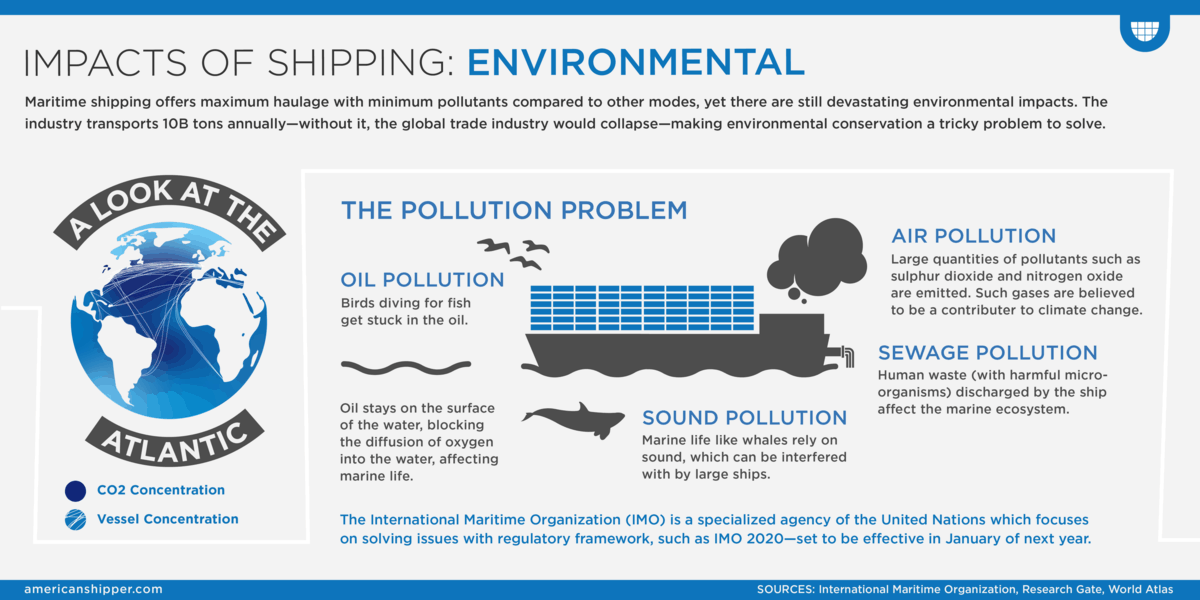
Infographic: American Shipper, Shipping Impact Series: Environmental, Emily Ricks
You might not stay up at night worrying about your carbon footprint, but some of your customers will. In the furniture industry, sustainability is no longer a nice-to-have marketing slogan. It’s a competitive requirement.
The hidden cost of moving goods across the globe is rarely discussed, but Rose George, in her book Deep Sea and Foreign Going, puts the scale of global shipping into perspective:
“Compared with planes and trucks, ships are the greenest form of mass transport… [but] shipping is not benign because there is so much of it. It emits a billion tons of carbon a year… Ships create more pollution than Germany. And yet for decades nobody noticed.” – Pg98.
The Per-Unit Paradox
This raises a massive point for your buying strategy. On a per-unit basis, shipping a container from Vietnam is “efficient.” But the sheer scale of the global supply chain means that if shipping were a country, it would be the sixth-largest polluter in the world.
We shouldn’t just point fingers at the East. While China is currently the world’s largest annual emitter, we have to remember they are essentially compressing three centuries of Western industrialisation into just three decades.
They have the Second-Mover Advantage. Unlike the West, which spent 200 years experimenting with “dirty” coal and inefficient steam, China began its massive expansion with access to modern, advanced technology. Because of this, their manufacturing engine is often more efficient than the legacy systems still running in some parts of the West.
However, efficiency doesn’t cancel out scale. The sheer speed of their growth means that even with better tech, the environmental impact is enormous.
Under a business-as-usual scenario, and if other sectors of the economy reduce emissions to keep the global temperature increase below 2 degrees, shipping could represent some 10% of global GHG emissions by 2050. Ships use some of the world’s dirtiest fuels on earth. – T&E
Choosing the Right Sourcing Strategy
There is no one-size-fits-all approach to sourcing products. Wholesale, importing, and sourcing closer to home each come with their own advantages and trade-offs. The key to making the right choice lies in aligning your sourcing strategy with your business goals, operational capacity, market positioning, and what your customers prioritise.
- Wholesale offers flexibility and lower upfront risk, making it an ideal option for businesses seeking to test products without a significant financial commitment. However, margins may be slimmer, and suppliers control product availability.
- Importing allows for higher margins and exclusivity, enabling businesses to differentiate through unique product selections. However, it also introduces added complexity in logistics, financial management, and regulatory compliance.
- UK and European manufacturers provide a strong alternative for brands prioritising quality, sustainability, and ethical sourcing. Stricter labour and environmental standards can enhance brand reputation, but this often requires a premium pricing strategy to offset higher production costs.
Profit margin only matters if customers are coming through the door. If there are no customers to buy higher-margin products, there is no benefit. While larger margins can enable reinvestment, consider whether tying up cash in inventory is the best move right now. Would that money be better spent on marketing efforts to drive traffic and sales in the short term?
Personal Thoughts
Importing is essential. No country can produce everything it needs, and most industries rely on global supply chains backed by comparative advantage. However, importing shouldn’t be seen as the sole answer to improving your competitive margin.
A low-cost, low-price approach on its own is inherently unstable. There will always be a competitor willing to undercut you. As Michael Porter points out, there is only one true low-cost leader, achieved not simply through pricing but through efficiencies that competitors can’t match.
The better approach is to carve out a unique position.
Relying heavily on low-cost imports can give businesses an “artificial advantage.” Because they haven’t differentiated, they are locked in a cycle of competing with the next lowest-cost producer, hoping to outlast them.
This disrupts the natural process of Creative Destruction. Instead of businesses evolving through innovation, they are stuck. But if you decide to approach the market differently, providing real value and differentiation, you allow your business to thrive through true “natural selection.”
The key is finding a balance.
Ultimately, the best strategy balances cost considerations with the value you bring to your customers, carving out a space where you’re not just another player—you’re the leader of your own market.